The Tate Gallery’s Turner Prize is no stranger to controversy and let’s face it that’s the way they like it. Every year since 1984 their shortlist draws the ire of traditionalists who dismiss them as pseudo artists with all the showmanship of a carpet bagger but no substance at all. This year will be no exception and the shortlist is one of the most uncompromising in years. So much so that they have been compared to the Young British Artists of the 90s who launched the Turner Prize as the visual spectacle of the year.
Enrico David has been shortlisted. His work has been described as seductive and degenerate from opposite sides of the fence. In the past he has produced textile figures of bare-buttocked builders, club-wielding harlequins, dandies and masked commedia dell’arte silhouettes.
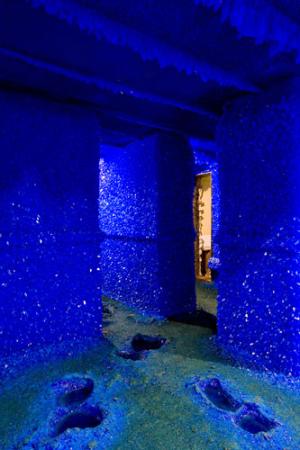
Next up is Roger Hiorns a sculptor who uses what he calls chemical interventions. A good example of this is his installation of last year calles Seizure. The work involved flooding a condemned London flat with cooper sulphate crystals to produce “a magical cave of blue crystals.” The above photograph is of that piece of work.
Lucy Skaer, has created public artwork which involved taking up a paving stone in Glasgow, placing a diamond and a scorpion on a pavement in Amsterdam, and sneaking a moth and butterfly pupae into a criminal court in the hope they would hatch mid-trial. She is the only female artist to be nominated.
The last nominee, Richard Wright, is the odd one out in that he is a well established mainstream artist. Stephen Deuchar, director of Tate Britain and chair of judges, said that while Wright’s work was “discreet and self-effacing”, the others showed a sense of bold performance and “flamboyance”.
Work by the four shortlisted artists will be shown in an exhibition at Tate Britain, opening 7 October, and the winner of the £25,000 prize will be announced in December.
