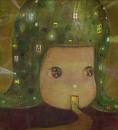
Later this month, London’s Hayward Gallery will display an exhibit entitled “Walking in my Mind”. Ten artists will be showcased, each putting forward works which are designed to give the viewer an insight into the psyche of the artist. Perhaps the darkest amongst them will be the work of Japanese artist Yoshitomo Nara.
Nara became famous in the Japanese pop art scene of the 1960s. Born in 1959, he had a very lonely and impoverished childhood and had sought escape in the barrage of Western culture which post war Japan was awash with. Comic books, which had arrived with the first American GIs, were a firm favourite.
Billed as a homage to the memories, triggered every time Nara puts pen to paper, darkness counterpoints with light to produce compelling yet disturbing images, such as an innocent child brandishing a hunting knife. Described as a physical manifestation of his mental landscape, the images are windows to a psyche formed during his childhood. They are also a good example of how Japanese art developed post war as it came to terms with a large influx of western culture.
“Nara has intrigued, delighted and disturbed with his curious cast of wide-eyed, balloon-headed characters. These cutesy, cartoon-like creatures at first appear full of innocence and wonder, but on closer inspection reveal what could well be expressions of fearful malevolence. The overall effect is more than a little unnerving.”It is this sense of dark and light in counterpoint that is central to his work.
