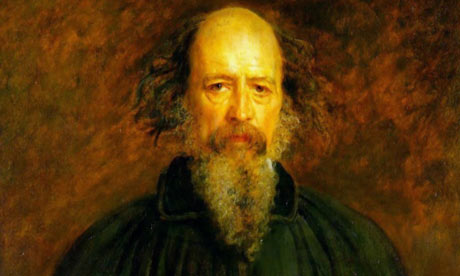
“I really came to Tennyson through painting. Wherever I looked at the painters I loved – Millais, Holman Hunt, Watts – I realised they were completely in awe of Tennyson. The house struck me as like a work of art, too, a painting in urgent need of sensitive restoration.”
The above quote by Martin Beisly, senior expert on Victorian painting at Christie’s auction house, gives some idea of the influence Tennyson’s poetry has had on the arts, particularly Victorian art. Beisly and friend Rebecca Fitzgerald have bought Farringford House on the Isle of Wight, Tennyson’s home of 40 years, and after much restoration have, this week, opened the doors to the public. The library has been restored to museum display standards, and will house regular exhibitions. With curator Veronica Franklin Gould, an expert on the period, they have secured major loans from national collections, including the Watts Gallery in Compton and the Tennyson study centre in Lincoln, which holds the family archives.
Tennyson moved to The Isle of Wight in 1853 having become weary of all the attention his considerable fame had brought him in London. An A list celebrity of his day, Tennyson found it impossible to work in London anymore. However he was not to be left alone and the house was host to an endless stream of the great and the good. Disraeli, Darwin, Lewis Carroll, Giuseppe Garibaldi and the Queen of Hawaii to name but a few.
The house became a hotel in the early 20th century, owned at different times by both Thomas Cook of the travel firm, and Sir Fred Pontin of holiday camp fame. Over the years, the house became dilapidated and run down until it was bought three years ago by the current owners, Biesly and Fitzgerald. It now promises to be a showcase foe Victorian art and a testimony to the influence a man of letters had on the visual arts.
