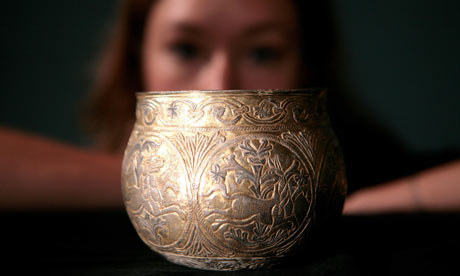
A beautifully decorated silver chalice filled with silver coins and jewelery known as the Vale of York hoard goes on display at the British Museum, London this week. Described as the most significant Viking find since 1870, it was discovered by a father and son team of metal detector enthusiasts David and Andrew Whelan. The Whelans along with the owner of the field in which they found the hoard now share £1,082,000 the value that was put on the hoard.
The British Museum’s curator of medieval coinage, Gareth Williams, recalled the huge and growing excitement after the hoard came to the museum in 2007. “It was clear as soon as the vessel came in that we had something very important. Once we got the x-rays we could see it was packed with silver. Even then, I don’t think we anticipated how much.”
There was in fact 617 coins stuffed into the chalice some from as far away as northern Russia and Afghanistan. The intricately decorated chalice was probably looted from a monastery in France. Experts say that the find represents the life savings of a wealthy Viking and was buried approximately one thousand years ago. They can only speculate as to why its owner never returned to collect it.
Williams says the hoard will greatly increase our understanding of the Vikings trading connections, cultural contacts and cultural diversity . “We use Viking as a shorthand term and there’s the traditional raping and pillaging image of the Vikings. That was replaced in the 1970s by what I think of as the fluffy bunny school of Viking studies which said, actually, they’re all peaceful traders and farmers. The truth is they are both.”
